

Gentle Pediatric Dental X-Rays in Alexandria, VA
Some of the most important parts of your child’s smile are the ones no one can see. At Kind Roots Pediatric Dentistry, we use digital dental X-rays to look between teeth, beneath the gums, and inside the growing jaw, so small concerns can be caught while they’re still small. If you’ve been searching for kids dental X-rays in Alexandria, VA, we’d love to welcome your family, answer your questions, and build an imaging plan around your child instead of a calendar.
What Are Digital X-Rays, and Why Do Kids Need Them?
Digital X-rays are images captured with a small electronic sensor instead of film, and children need them because a visual exam only shows the outside surfaces of the teeth. Cavities often start where teeth touch, and adult teeth develop for years below the gums before they appear.
Kids’ mouths change quickly between infancy and the teen years, and children’s dental X-rays give us a record of that growth so we can plan care that fits each stage. Imaging is one part of the preventive dental care we provide, alongside exams, cleanings, and fluoride.
What Can Dental X-Rays Detect That an Exam Can’t?
X-rays can reveal problems before they’re visible, painful, or causing symptoms. A tooth can look healthy and feel fine while decay quietly spreads between it and its neighbor. Imaging helps us find:
- Cavities between teeth and under existing fillings
- Adult teeth that are missing, extra, or developing out of position
- Infections or abscesses near the roots
- Crowding or spacing patterns that may affect future orthodontic needs
- Damage from a fall or sports injury that isn’t obvious on the surface
Early cavity detection often means a smaller filling, a more conservative treatment, or simply closer monitoring. The sooner we see something, the more gently we can treat it.
How Often Should Children Have Dental X-Rays?
There is no single answer, because every child at Kind Roots receives individualized X-ray recommendations instead of a one-size-fits-all schedule. We don’t take X-rays simply because a certain amount of time has passed.
Not every child needs X-rays at every visit. If your child’s cavity risk is low and we can clearly see between their teeth, we may wait. If something changes, such as a new cavity or a dental injury, we may recommend imaging sooner. Either way, we’ll always explain why.
What Factors Shape My Child’s X-Ray Recommendations?
Our recommendations are based on your child’s age, dental history, cavity risk, stage of development, and any current symptoms. At each exam, we weigh:
- Age and development, including which baby teeth are gone and which adult teeth are on the way
- Cavity risk, based on diet, brushing habits, past decay, and tooth spacing
- Dental history, such as previous fillings, crowns, or injuries
- Current concerns, like pain, swelling, or a chipped tooth
- Recent images from another office, which we’re glad to review so your child isn’t imaged twice
Because these factors shift as kids grow, last year’s plan may look different this year, and we’ll talk it through with you at every visit.
At What Age Do Children Usually Get Their First Dental X-Rays?
Many children have their first X-rays between ages 3 and 6, often once their back baby teeth begin to touch and we can no longer see between them. Infants and toddlers rarely need imaging unless there’s a specific concern, like an injury.
Later, common moments for a closer look include the arrival of adult molars, the years before an orthodontic evaluation, and the early teens, when we check on developing wisdom teeth. These milestones are starting points for a conversation, not dates on a chart.
What Types of Dental X-Rays Are Used for Children?
The most common types are bitewing, periapical, panoramic, and occlusal X-rays, and each one answers a different question. We choose only the view that gives us the information we need.
Bitewing X-Rays
Bitewing X-rays show the upper and lower back teeth together and are the best tool for finding cavities between teeth. Your child gently bites on a small sensor holder while the image is taken.
Periapical X-Rays
Periapical X-rays capture a whole tooth from crown to root tip, helping us check a tooth after an injury, look for infection, or follow an adult tooth developing beneath a baby tooth.
Panoramic X-Ray
A panoramic X-ray shows the entire mouth, jaws, and every developing tooth in one wide image. Nothing goes inside the mouth, which many kids find easier.
Occlusal X-Rays
Occlusal X-rays show the roof or floor of the mouth and are especially helpful for younger children, revealing how front teeth are developing or whether an injury affected teeth below the gums.
Are Digital Dental X-Rays Safe for Kids?
Yes. When X-rays are clinically indicated, digital technology lets us capture the images we need using very low radiation doses. Today’s dental imaging involves very low radiation doses and a very small risk of harmful effects, and digital sensors require significantly less exposure than older film systems.
Recommending an X-ray is always a clinical decision, made only when what we’ll learn outweighs the minimal exposure. If you have worries about radiation, please share them. We’d much rather talk through your concerns than have you sit with them.
What Is the ALARA Principle, and How Do We Follow It?
The ALARA principle stands for “As Low As Reasonably Achievable,” and it guides every imaging decision we make. It means using the lowest dose that still produces a clear, useful image, and only taking X-rays when there’s a real diagnostic reason. In practice, it looks like:
- Recommending X-rays based on your child’s needs, not a fixed timeline
- Choosing the fewest images that answer the clinical question
- Using digital sensors sized for smaller mouths
- Positioning your child carefully so images rarely need to be retaken
How Do Digital X-Rays Compare to Traditional Film?
Digital X-rays are faster, clearer, and use significantly less radiation than traditional film, which is why we rely on low-radiation dental imaging for every child we see. Compared with film, digital imaging offers:
- Images on the screen almost immediately
- The ability to enlarge images for a closer look
- Shorter appointments, which matters when little ones are wiggly
- Easy, secure sharing with specialists when needed
Seeing images right away helps you, too. We can turn the screen toward you and explain what we’re seeing in plain language, so you’re a true partner in your child’s care.
What Happens During a Child’s X-Ray, and How Do You Help Anxious Kids?
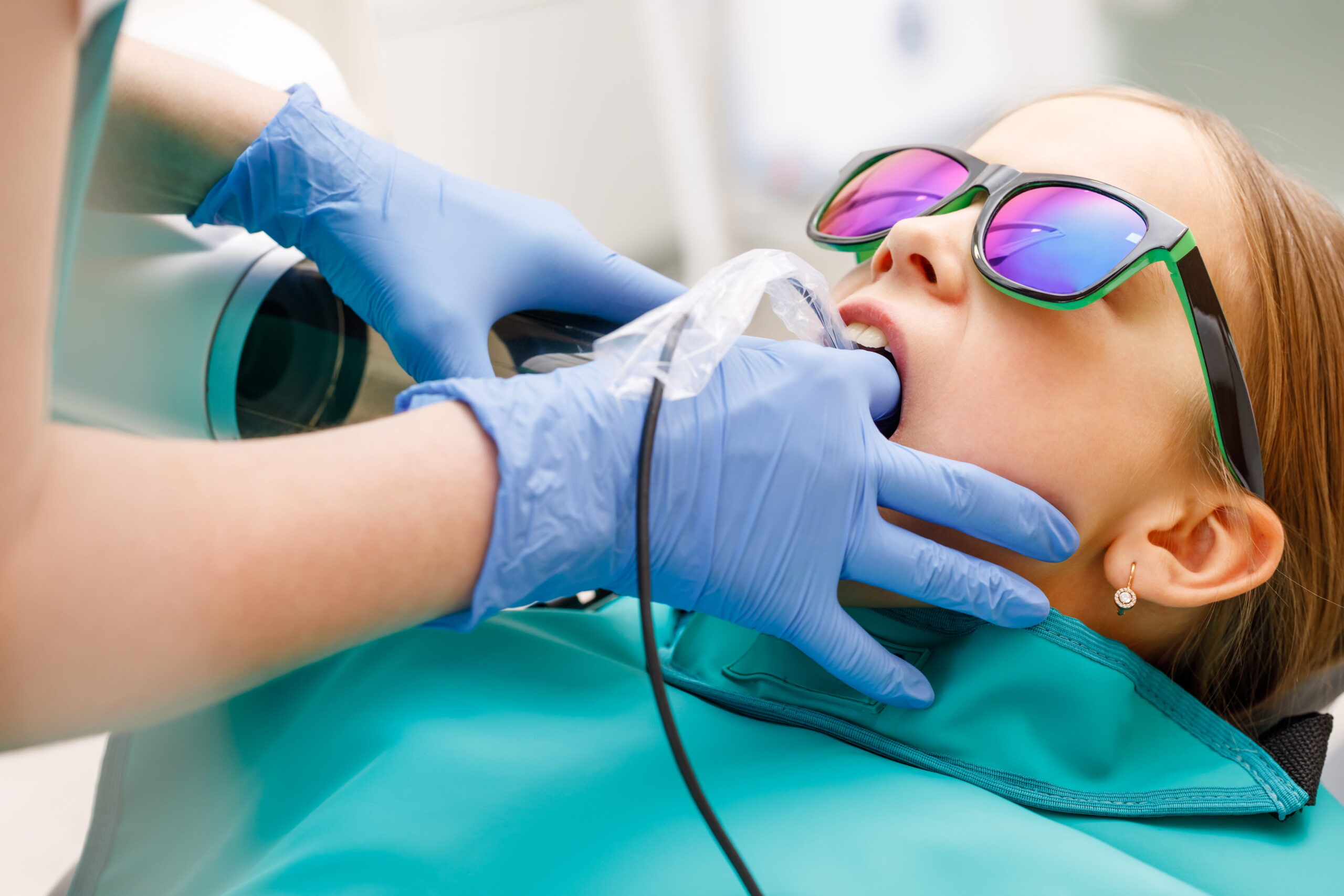
The process is quick and non-invasive: we position your child with a small sensor or X-ray device, ask them to stay still for a few seconds, and capture the image. We explain each step in kid-friendly language and never rush.
Dr. Mensah’s background in psychology shapes how our team supports children who feel nervous, are sensory-sensitive, or have special healthcare needs. We might:
- Use a “tell-show-do” approach so your child sees and touches the equipment first
- Let them practice biting on the sensor holder before the real picture
- Offer breaks, a calm voice, and plenty of praise
- Adjust lighting, sound, or pacing for kids with sensory sensitivities
If an X-ray isn’t going to go well on a particular day, we can often try again at a future visit. Your child’s trust matters more to us than any single image.
Why Choose Kind Roots Pediatric Dentistry for Digital X-Rays
Families choose us because we treat imaging as a thoughtful decision, not a box to check. Dr. Celeste Mensah is a Diplomate of the American Board of Pediatric Dentistry with fellowship training in dental anesthesia and honors in special care dentistry. Parents appreciate:
- Individualized X-ray recommendations built around their child, never a blanket schedule
- A careful, ALARA-guided approach to radiation safety
- Psychology-informed support for anxious and sensory-sensitive kids
- Imaging that connects to our full range of children’s dental services, so findings lead straight to a gentle plan
Let’s Take a Gentle Look Together at Kind Roots
Whether your child is due for a checkup or you simply have questions about X-rays, our team is here to help. Call us at 571.741.6100 or schedule your child’s visit online, and we’ll create an imaging plan that fits your child. We look forward to welcoming your family to our Alexandria, VA office and helping your child grow a healthy, confident smile.